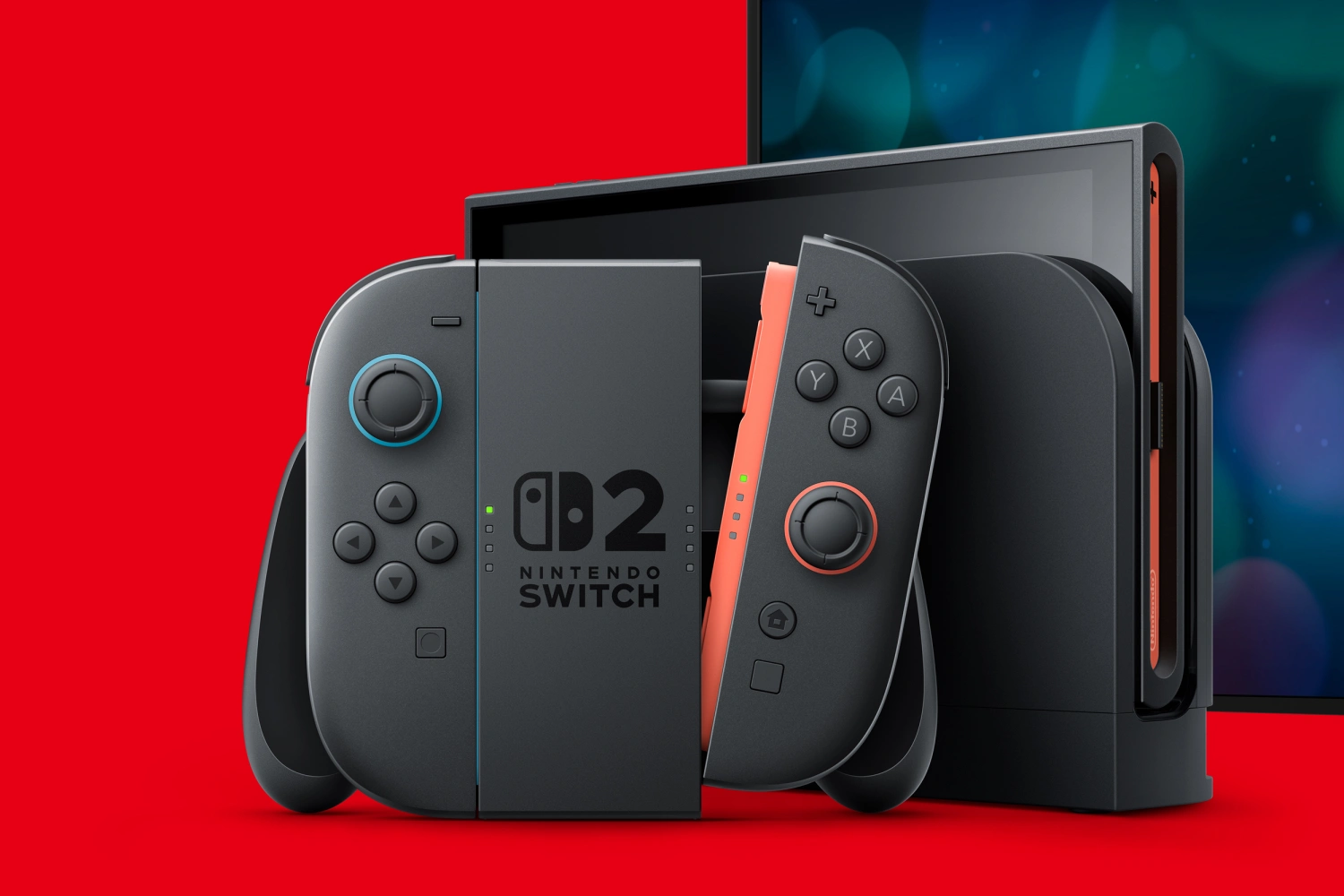
When Nintendo finally lifted the curtain on the Switch 2, gamers worldwide had been waiting with bated breath for nearly eight years. The original Switch revolutionized how we think about gaming—blurring the lines between home console and portable device. Now, with the Switch 2 officially launched on June 5, 2025, at $449.99, Nintendo has doubled down on what made the original so special while addressing its most glaring shortcomings.
The Journey to Launch
Nintendo first teased the Switch 2 in January 2025, giving fans their first glimpse of the hardware through a carefully crafted reveal trailer. The announcement came after months of speculation and rumors suggesting a late 2024 release. However, industry insiders later confirmed that Nintendo deliberately pushed the launch to Q1 2025, then ultimately to June, ensuring a robust lineup of first-party titles would be ready at launch.
This strategic delay proved wise. Rather than rushing to market, Nintendo took the time to polish both the hardware and its software ecosystem. The result is a console that feels genuinely next-generation while maintaining the hybrid DNA that made the Switch a cultural phenomenon.
Design Evolution: Familiar Yet Refined
At first glance, the Switch 2 looks like an iterative update rather than a complete reimagining. But spend time with the device, and you’ll notice the thoughtful improvements everywhere. The console is slightly larger than its predecessor, accommodating an 8-inch OLED display compared to the original’s 6.2-inch LCD screen. The bezels have been dramatically reduced, giving the Switch 2 a more modern aesthetic.
The Joy-Con controllers have received the most significant overhaul. They’re now magnetically attached to the console—a major upgrade from the rail system that occasionally caused connectivity issues on the original. The new Joy-Cons feel more substantial in hand, with improved ergonomics that make extended gaming sessions considerably more comfortable. Nintendo has also addressed the infamous drift problem with a redesigned analog stick mechanism that uses hall-effect sensors, virtually eliminating the issue that plagued millions of Switch owners.
The kickstand, another notorious weak point of the original Switch, has been completely redesigned. The new version spans the entire width of the console and offers multiple angle adjustments, making tabletop mode genuinely practical for the first time.
Performance: A Generational Leap
Under the hood, the Switch 2 represents a substantial performance upgrade. While Nintendo remains tight-lipped about specific technical specifications, early benchmarks suggest the console delivers performance roughly equivalent to the PlayStation 4 Pro in docked mode. This means games can finally run at consistent frame rates with higher resolution textures and more complex visual effects.
The handheld experience has also been dramatically improved. Games that struggled to maintain 720p at 30fps on the original Switch now run smoothly at 1080p with improved frame rates. Third-party developers have particularly benefited from the increased horsepower, with several major publishers already announcing enhanced versions of their flagship titles.
Backward compatibility was a major concern leading up to launch, and Nintendo has delivered admirably. The Switch 2 can play virtually every physical and digital Switch game from the original console. Better yet, many titles receive automatic enhancements when played on the new hardware, including faster load times, improved frame rates, and higher resolutions.
Launch Lineup: Quality Over Quantity
Nintendo’s decision to delay the Switch 2 has paid dividends in the software department. The launch lineup features several highly anticipated first-party titles, including a new entry in the Mario Kart series that showcases the console’s graphical capabilities. The game runs at a buttery-smooth 60fps in both docked and handheld modes, with visuals that rival modern racing games on more powerful hardware.
Third-party support has been notably strong at launch. Major publishers have committed to bringing their latest titles to the platform, with several announcing Switch 2-exclusive features. The console’s improved performance has made it a more attractive platform for developers who previously struggled with the original Switch’s hardware limitations.
The Online Experience
Nintendo has maintained its subscription-based online service, Nintendo Switch Online, for the Switch 2. Subscribers get access to cloud saves, online multiplayer, and a growing library of classic games. While the online infrastructure remains less robust than PlayStation Network or Xbox Live, Nintendo has made incremental improvements to stability and feature set.
Battery Life: A Balancing Act
Battery performance was a major selling point for the original Switch, particularly after the revised model extended playtime significantly. The Switch 2 manages to maintain similar battery life despite the more powerful internals and larger screen. Nintendo claims 4.5 to 9 hours of battery life depending on the game, which aligns closely with real-world testing. Intensive titles like first-person shooters and open-world games tend toward the lower end of that spectrum, while less demanding games can stretch closer to the maximum.
The console supports USB-C charging with faster charging speeds than the original, reaching 80% capacity in approximately 2.5 hours. This makes it practical to top up the battery during short breaks.
Price and Value Proposition
At $449.99, the Switch 2 sits squarely between the original Switch’s launch price and the premium pricing of Sony and Microsoft’s current-generation consoles. The price point has generated mixed reactions. Some argue it’s too expensive for a Nintendo console, while others point to the significant hardware improvements and backward compatibility as justification.
The value equation becomes clearer when considering the total cost of ownership. Unlike its competitors, the Switch 2 doesn’t require a separate handheld and home console. For families or individuals who value portability, the Switch 2 offers something truly unique that justifies the premium over the original model’s current pricing.
Should You Upgrade?
The question of whether to upgrade from the original Switch depends largely on individual circumstances. Early adopters who bought the first Switch at launch have gotten years of use from their console and may find the improvements compelling enough to justify an upgrade. The enhanced performance, better screen, and improved Joy-Cons address many pain points that accumulated over the original’s lifespan.
For those who purchased a Switch more recently, especially the OLED model, the calculus is trickier. The improvements are real and measurable, but may not feel essential if your current console still meets your needs. The strong backward compatibility means there’s no pressure to upgrade immediately—your existing library will continue to receive support.
New buyers face the easiest decision. While the original Switch will likely remain available at a reduced price, the Switch 2’s improvements and future-proof nature make it the obvious choice for anyone entering Nintendo’s ecosystem for the first time.
Looking Forward
The Switch 2 represents Nintendo’s commitment to the hybrid console concept that has served them so well. Rather than chasing raw power to compete directly with Sony and Microsoft, Nintendo has refined their unique vision of what gaming can be. The result is a console that feels both familiar and fresh, honoring the original’s legacy while charting a path forward.
As developers become more familiar with the hardware and push its capabilities, we’ll likely see games that truly showcase what the Switch 2 can do. Nintendo’s first-party studios have a proven track record of extracting every ounce of performance from their hardware, and early indications suggest the Switch 2 will be no exception.
Final Verdict
The Nintendo Switch 2 is exactly what it needed to be—a thoughtful evolution of a winning formula. It doesn’t reinvent the wheel, but it makes the wheel roll a whole lot smoother. The combination of improved performance, refined design, and strong backward compatibility creates a compelling package that should serve Nintendo well for years to come.
Whether you’re a longtime Nintendo fan or someone curious about what the hybrid gaming experience offers, the Switch 2 delivers. It’s not perfect—the online infrastructure still lags behind competitors, and the price may give some pause—but it’s an excellent gaming device that successfully builds on one of Nintendo’s greatest achievements.