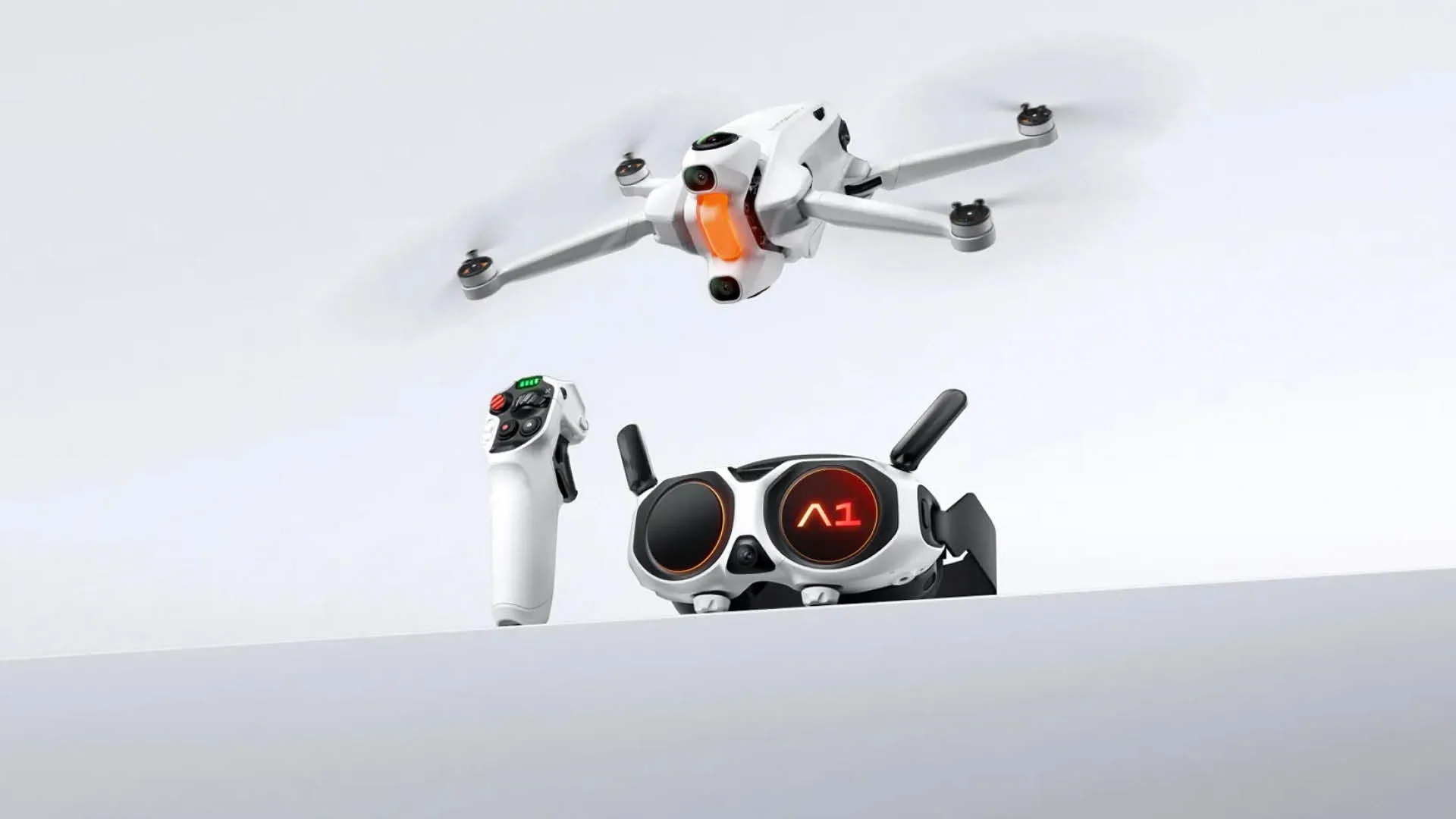
The drone industry has witnessed remarkable innovation in recent years, but few products have generated as much excitement as the Antigravity A1, unveiled in December 2025. This groundbreaking device, developed by Antigravity—a new drone brand incubated by action camera leader Insta360—represents a fundamental rethinking of how we capture aerial footage and experience flight. With its revolutionary 8K 360-degree camera system and immersive control scheme, the A1 is not just another drone; it’s the beginning of an entirely new category of aerial imaging devices.
A New Category of Drone
Rather than incrementally improving existing drone designs, Antigravity has created something genuinely different. The A1 is the world’s first drone built specifically around 360-degree capture and immersive flight experiences. This isn’t simply a conventional drone with a 360 camera attached—the entire product philosophy, from hardware design to control systems to software capabilities, has been reimagined from the ground up.
The drone weighs just 249 grams, positioning it below the critical 250-gram threshold that triggers more stringent regulations in many jurisdictions. Despite its featherweight construction, the A1 packs sophisticated technology, including a dual-lens camera system with one lens on top and one on the bottom of the aircraft. This configuration enables true spherical capture with no blind spots, delivering complete 8K 360-degree footage.
The camera system represents the culmination of Insta360’s years of expertise in 360 imaging technology. The dual lenses work in concert to capture everything around the drone simultaneously, with advanced stitching algorithms seamlessly combining the footage into a single spherical video. Even more impressively, the software can render the drone itself invisible in the final footage—a signature feature that Insta360 has perfected in its action cameras and has now brought to the aerial realm.
Revolutionary Control and Immersion
What truly sets the Antigravity A1 apart is its control system, which abandons traditional drone controllers in favor of an entirely new approach. The drone comes with Vision goggles featuring dual 1-inch micro-OLED displays that provide an exceptionally immersive first-person view of flight. These aren’t simple FPV goggles showing a flat image—they deliver a truly spherical viewing experience that places pilots inside a virtual bubble, able to look in any direction independent of where the drone is flying.
This is made possible by Antigravity’s proprietary FreeMotion technology, which decouples head movement from flight direction. Pilots can look left, right, up, or down using head tracking while the drone continues flying straight ahead. This revolutionary approach feels both natural and liberating, enabling exploration and observation that would be impossible with conventional drones where the camera is fixed to the drone’s orientation.
The physical controller, called the Grip, responds to natural hand movements rather than requiring mastery of traditional dual-stick controls. The system offers two control modes: FreeMotion Mode for maximum freedom of exploration, and FPV Mode for those who prefer more conventional control schemes. This flexibility ensures the A1 can accommodate both newcomers seeking intuitive control and experienced pilots wanting precision.
Capture First, Frame Later
One of the most compelling aspects of 360-degree capture is the ability to reframe footage after recording. Traditional drones force pilots to make critical framing decisions during flight, requiring simultaneous attention to flying, framing, and composition. Miss the perfect angle, and you’ve lost the shot. The A1 fundamentally changes this equation.
Because the drone captures everything in all directions simultaneously, pilots can focus entirely on flight and positioning during recording. The framing decisions happen later, during post-production, where users can explore the spherical footage and extract multiple conventional shots from a single flight. Want a dramatic upward angle? It’s there. Prefer a side view? That’s captured too. This “fly first, frame later” philosophy dramatically reduces the pressure on pilots and opens creative possibilities that traditional drones simply cannot match.
The 8K resolution ensures that even when extracting conventional flat footage from the spherical capture, image quality remains excellent. Users can create multiple videos from different angles using the same source footage, maximizing the value of every flight. The software also enables creative effects like Tiny Planet shots and other 360-specific visual styles that add visual interest and uniqueness to content.
Safety and Accessibility
Antigravity has prioritized making drone flight accessible to more people while maintaining safety standards. The A1 includes obstacle avoidance technology and return-to-home functionality, providing confidence for pilots at all skill levels. These safety features are particularly important given the immersive control system—pilots wearing the Vision goggles may become absorbed in the flying experience, so automated safety systems provide an important backup.
The company has also implemented payload detection technology to prevent unauthorized modifications that could compromise flight safety. This forward-thinking approach addresses potential misuse while ensuring the drone operates within its designed parameters.
Battery life is approximately 15 minutes with the standard battery, which is comparable to other drones in this weight class. While not groundbreaking, this runtime is sufficient for most recreational flights and creative projects. The company has indicated that a 24-minute and 39-minute battery option will be available, giving users flexibility based on their needs.
Creative Possibilities and Applications
The Antigravity A1 opens creative possibilities that extend far beyond traditional aerial photography and videography. The combination of 360 capture and immersive control makes it ideal for documenting experiences, exploring environments, and creating content that truly transports viewers.
Family moments and personal adventures take on new dimensions when captured in 360, allowing viewers to revisit experiences and discover new details each time they watch. Travel creators can offer audiences unprecedented immersion in destinations, while real estate professionals can provide comprehensive property tours that show every angle. Adventure sports enthusiasts can capture their activities with a perspective that traditional cameras cannot match.
The auto-editing features built into the software further lower barriers to creating polished content. Users can quickly generate shareable videos without extensive editing skills, though manual control remains available for those who want it. This balance between accessibility and creative control is central to the A1’s appeal.
The Future of Aerial Imaging
The Antigravity A1 represents more than just a new product—it signals the emergence of a new category within the drone industry. For years, drone development has focused on incremental improvements to existing designs: longer flight times, better cameras, more sophisticated obstacle avoidance. While valuable, these advances have largely been evolutionary rather than revolutionary.
Antigravity’s approach is different. By fundamentally rethinking how drones capture footage and how pilots control them, the company has created something that feels genuinely new. The immersive flight experience enabled by the Vision goggles and FreeMotion technology provides a glimpse of how aerial exploration might evolve. The 360 capture philosophy—fly first, frame later—solves real frustrations that traditional drone pilots face.
Of course, the A1 is a first-generation product in a new category, and limitations exist. The 15-minute base battery life may feel short for some users. The price point positions it as a premium offering rather than an entry-level device. The immersive control system, while innovative, requires adaptation for pilots accustomed to traditional controllers.
But these considerations don’t diminish the significance of what Antigravity has achieved. The A1 demonstrates that there is still room for genuine innovation in consumer drones, that new approaches to capture and control can offer meaningful advantages, and that the marriage of 360 imaging technology with aerial platforms creates compelling new possibilities.
Conclusion
The Antigravity A1 arrives at a moment when the drone industry needs fresh thinking. As the first 360 drone built around immersive flight and spherical capture, it establishes a new category with distinct advantages over conventional designs. The combination of 8K 360 imaging, FreeMotion control technology, and intuitive user experience makes aerial capture more accessible and more creative simultaneously.
For content creators seeking new perspectives, adventurers wanting to document experiences more completely, or anyone intrigued by the idea of truly immersive flight, the Antigravity A1 offers something that simply didn’t exist before. It’s not perfect, and it won’t replace traditional drones for every application. But it doesn’t need to. The A1 succeeds by being genuinely different, by offering capabilities and experiences that conventional drones cannot match, and by pointing toward an exciting future where aerial imaging becomes more immersive, more expressive, and more fun. Antigravity has indeed launched something special—the question now is how the rest of the industry will respond.